Education for life.
Montessori has served children and families around the world for over a century. The basics remain — for good reason. Its methods are consistently backed by current research in education and human development.
Meets children where they are, without judgement
Learning is not linear, and children aren’t ready for specific skills on an adult’s timeline or in perfect step with their peers. Children who need more support get it; those ready to move ahead find the challenge they crave. No two people should be expected to grow at the same rate.
Cultivates community
- Teachers connect with one another, and with the wider Montessori network, to keep growing
- Parents and teachers have ample time to discuss each child’s growth and needs
- Parents form relationships with one another
- Children bond across ages and levels
- We reach out to the local community, and give educators and families a voice in decisions
More than just academics…
“Teaching the whole child” means something deep here. Art and movement are woven into everything children do, and we intentionally teach how to resolve conflict and the norms of grace and courtesy.
…but the academics are a huge strength
Montessori academics are often hailed as some of the highest standards there are. It is not uncommon to see four-year-olds reading — done joyfully, because children discover ideas for themselves rather than passively taking in facts.
Aims to lift up humanity
Montessori schools aim for peace — kindness between individuals, respect for the environment and every living being, and reverence for the world’s many cultures.
Five ideas behind
every classroom.
Foster independence
Free movement and free choice within limits, practical life skills like cleaning and preparing food, and voices that are heard — a tremendous sense of empowerment.
Follow the child
Teachers trained in the specific developmental stages of the children they work with, and plenty of room to study personal interests deeply.
Value kindness and peace
World geography from a young age, traditions from many cultures, and conflict-resolution skills taught as social moments arise.
Integrate nature
Plants and animals to care for, botany and zoology from the primary level, and time out in nature whenever possible.
Beautiful classrooms
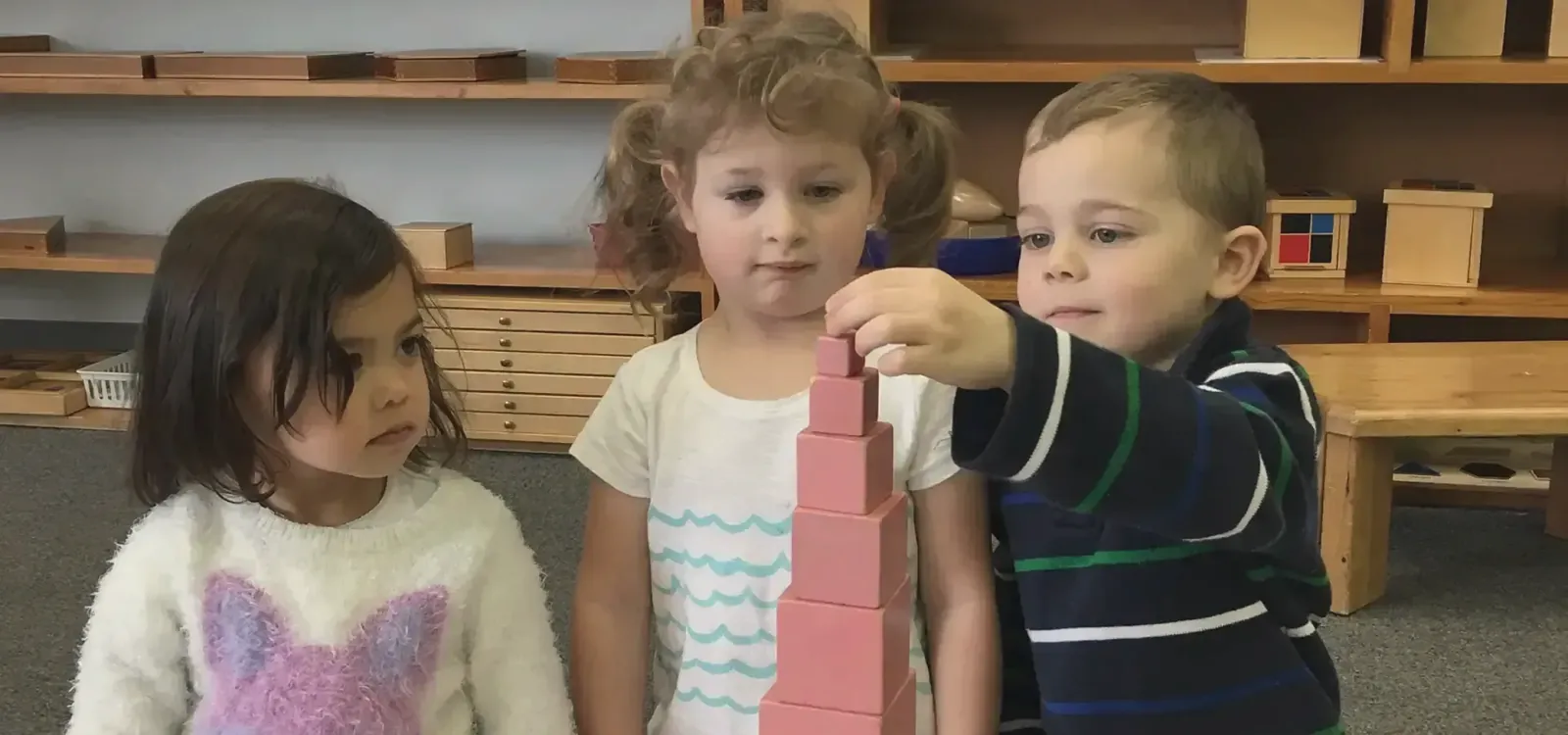
Natural materials and light, living things, low shelves and high-quality materials that inspire children to make their work beautiful.
Your child’s second home is waiting.
Visit on a weekday morning and see a calm, joyful classroom at work — or, if you already know, apply online in a few minutes.