“Within the child lies the fate of the future.”
One of the first women to practise medicine in Italy — a scientist who watched children carefully and discovered that they construct their own personalities as they interact with their environment.
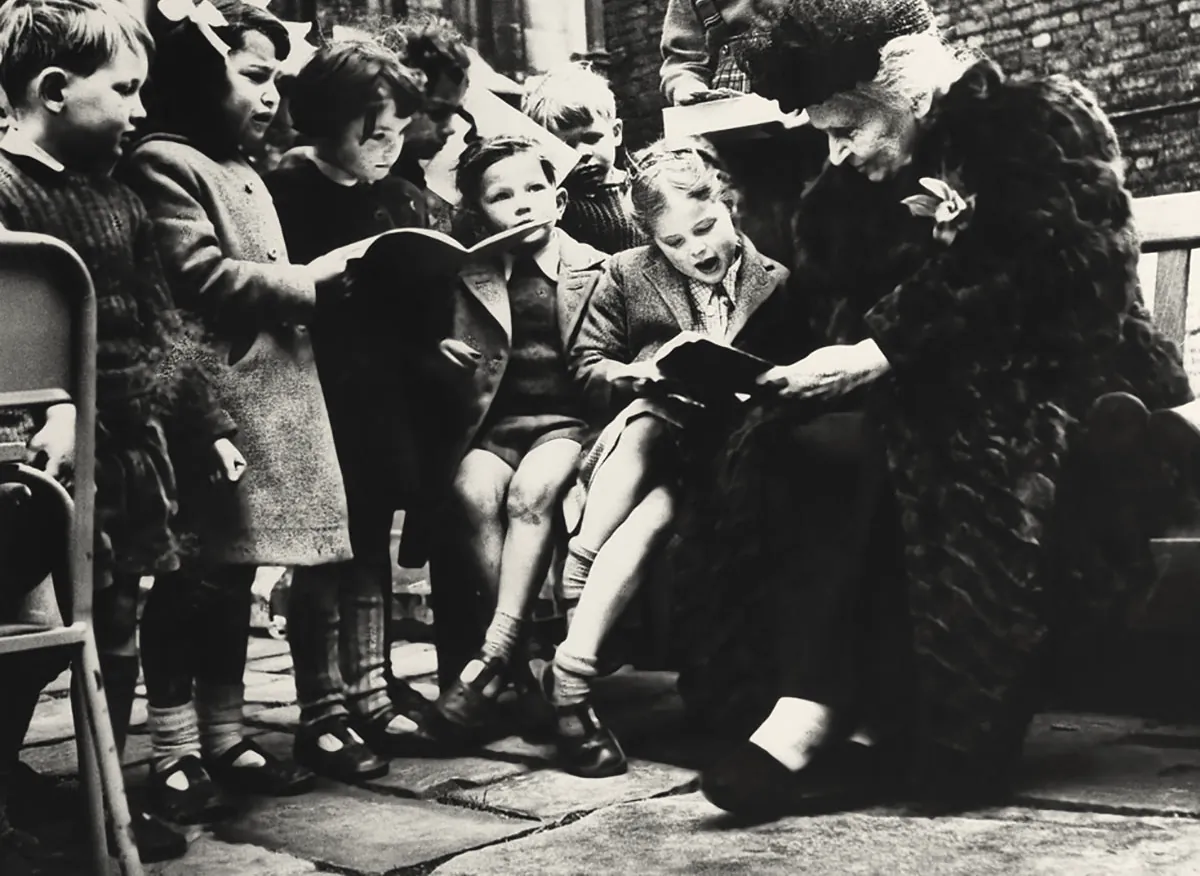
A scholar of biology, psychiatry, anthropology and medicine, she graduated from the Faculty of Medicine at the University of Rome in 1896. She studied children of all races and cultures in many countries, seeing the universality of the laws of human development, and kept observing throughout her life.
She declared two principles as the foundation of Montessori pedagogy: the universal characteristics of the human child, and the child as a unique, unrepeatable, admirable individual — one of life’s most marvellous expressions.
A devoted humanitarian, she was nominated for the Nobel Peace Prize three times.
Graduates in medicine from the University of Rome — one of the first women in Italy to do so.
Opens the Casa dei Bambini — the “Children’s House” — for children ages 3 to 6 in San Lorenzo.
First visit to the United States. Alexander Graham Bell and his wife Mabel found the Montessori Educational Association.
Her “glass house” schoolroom draws international attention at the Panama-Pacific Exhibition in San Francisco.
Founds the Association Montessori Internationale (AMI) with her son, Mario.
Travels to India to train teachers; detained there during World War II.
Nominated for the Nobel Peace Prize three years running.
Dies in the Netherlands, her legacy carried on through AMI.
Your child’s second home is waiting.
Visit on a weekday morning and see a calm, joyful classroom at work — or, if you already know, apply online in a few minutes.